
After 300 WhatsApp Deliveries, GoBites Faces a Bigger Test in Kumasi’s Food Economy
A food delivery startup founded by KNUST students has completed more than 300 deliveries through WhatsApp. Its next challenge is proving that digital ordering can create sustainable value for food vendors, delivery riders and customers.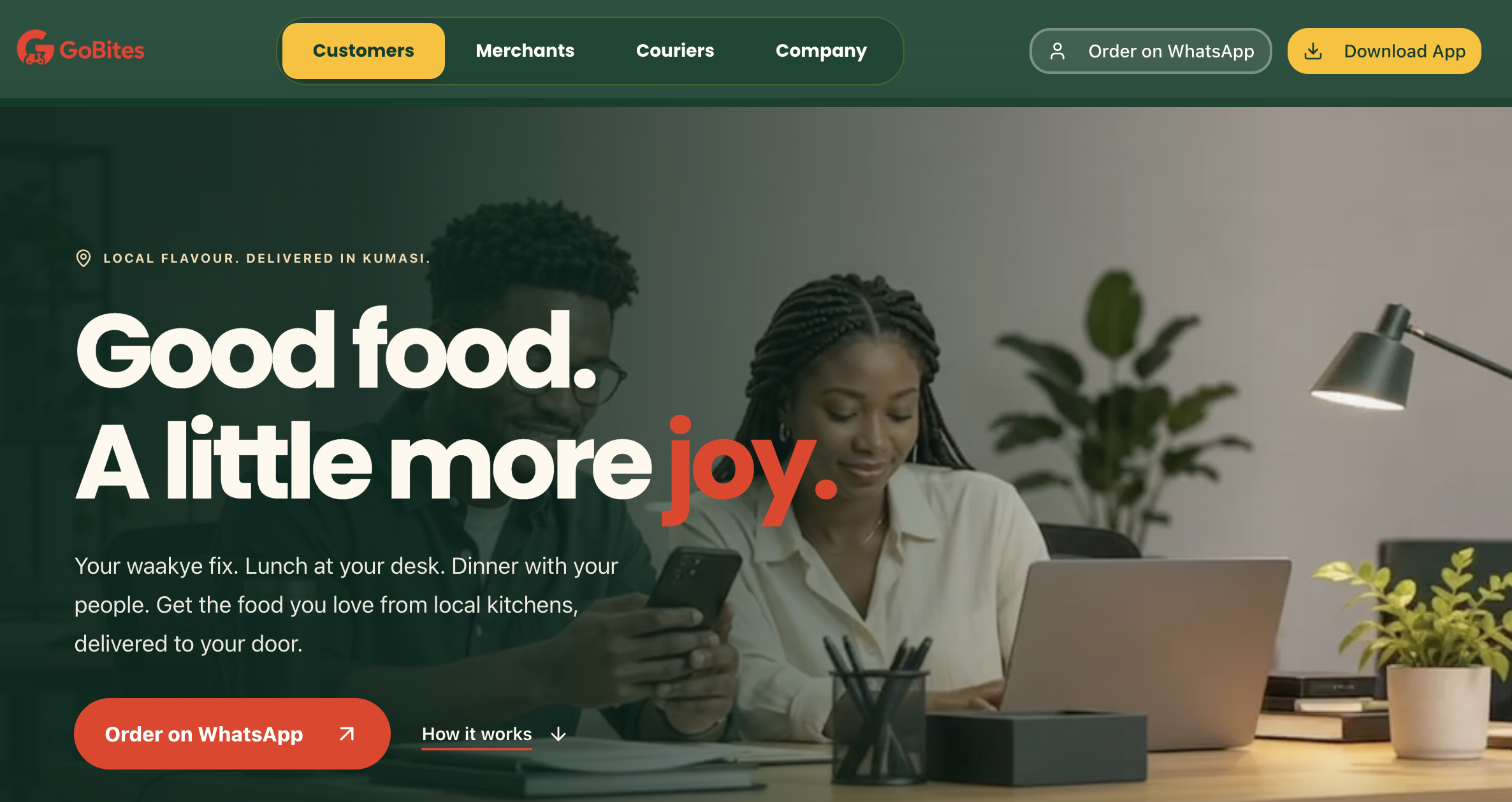
For many small food businesses in Kumasi, making a sale involves more than preparing a meal. Vendors must communicate with customers, confirm orders and arrange deliveries, often without dedicated delivery systems.
Digital platforms offer a way to connect these businesses with more customers. However, the bigger question is whether they can generate enough demand to benefit vendors while providing reliable income for delivery riders.
One startup exploring this opportunity is GoBites, a food delivery venture founded by students of the Kwame Nkrumah University of Science and Technology (KNUST).
The company says it has completed more than 300 deliveries using WhatsApp as its primary ordering channel. It has since introduced applications for merchants and delivery riders, while its customer-facing application remains in testing.
GoBites’ progress offers a look at the opportunities and practical challenges facing young entrepreneurs building technology-enabled businesses in Ghana.
From WhatsApp Orders to Dedicated Applications
GoBites began by coordinating food orders through WhatsApp rather than relying on a complete suite of mobile applications.
Customers placed orders through the messaging platform, while the team communicated with food vendors and coordinated deliveries with riders.
This approach required manual work at several stages, including confirming orders, checking food availability, arranging pickups and updating customers.
According to the company, it completed more than 300 deliveries during this period.
The experience gave the team an opportunity to test its operations and understand the practical demands of connecting customers, vendors and riders.
The company has since introduced separate applications for merchants and delivery riders. The merchant application allows participating businesses to receive orders, manage menus and monitor sales activity.
The customer-facing application is still being tested.
Moving from WhatsApp to dedicated software could help GoBites organise orders and reduce manual coordination. However, the introduction of new applications does not automatically establish whether the business is growing or becoming more profitable.
The company has not publicly disclosed sufficient financial information to determine its revenue, delivery costs or profitability.
Can Digital Delivery Help Small Food Businesses?
Food businesses across Ghana use a range of channels to reach customers, including walk-in sales, telephone calls and messaging applications.
A delivery platform can provide another way to connect with customers who prefer ordering meals remotely. For small vendors, this could create opportunities to reach people beyond those who visit their premises.
But joining a platform also introduces additional considerations.
Vendors may need to maintain updated menus, prepare orders within agreed timelines, improve packaging and coordinate with delivery riders. These responsibilities can affect their costs and daily operations.
For example, an additional online order may increase a vendor’s revenue, but the financial benefit depends on the cost of ingredients, packaging, labour and any platform charges.
Delivery fees also influence customer decisions. If the total price of a meal becomes too expensive, customers may choose to collect their orders themselves or purchase directly from a nearby vendor.
GoBites is currently onboarding food businesses in Kumasi, including restaurants, chop bars, bakeries and independent food vendors.
Whether participation leads to increased sales remains an open question. Without information comparing participating vendors’ sales before and after joining the platform, the financial impact cannot yet be established.
For GoBites and similar businesses, the challenge is not simply bringing vendors online. It is making sure that the service creates enough value to justify its costs.
Delivery Riders and Ghana’s Employment Challenge
Delivery riders are essential to food delivery platforms. They connect vendors with customers, but their earnings depend on the availability of orders and the costs involved in completing them.
For young people seeking income opportunities, platform-based delivery work can offer a way to earn money, particularly for those who already have access to suitable transport.
However, access to delivery requests does not necessarily translate into stable earnings.
Riders must account for fuel, motorcycle maintenance, travel distances and waiting times when calculating how much they earn after expenses.
A 2026 study published in Heliyon, examining the experiences of 20 platform-based delivery workers in Accra, highlighted both self-employment opportunities and concerns about earnings, social protection and worker representation.
The study focused on a small group of workers in Accra, so its findings should not be treated as representative of every delivery platform or of riders in Kumasi. Nevertheless, it highlights questions that remain relevant as platform-based work expands.
GoBites has introduced an application for riders, but the company has not publicly disclosed how many riders receive regular work through the platform or their average earnings after expenses.
These details would help assess whether the business is creating meaningful and consistent income opportunities.
The broader question is not only how many riders a platform can recruit, but whether its order volume and payment structure can support them over time.
Student Entrepreneurship Beyond the Classroom
GoBites also reflects the growing interest in entrepreneurship among university students.
The venture was established by KNUST students who are building a business while pursuing their education.
Their experience comes against a challenging employment outlook for young people in Ghana.
According to the Ghana Statistical Service, unemployment among people aged 15 to 35 averaged 21.9 per cent nationally during the first three quarters of 2025. The Ashanti Region recorded a youth unemployment rate of 27.2 per cent over the same period.
These figures have increased attention on the role of entrepreneurship, business incubation and practical skills development in preparing young people for economic opportunities.
KNUST has pursued initiatives intended to encourage enterprise development, including its One Department, One Startup programme and business incubation activities.
For students building businesses independently, however, an idea is only the starting point.
Access to funding, customer acquisition, competition and operating expenses can determine whether a startup survives. Founders must also balance the demands of running a business with their academic responsibilities.
GoBites’ early operations have provided practical experience in managing orders and coordinating a delivery service. Its long-term prospects, however, will depend on whether it can attract repeat customers, retain participating vendors and operate at a sustainable cost.
Student entrepreneurship can create alternative career pathways, but individual ventures alone cannot resolve Ghana’s broader youth unemployment challenge.
The Economics Behind Food Delivery
Technology can make it easier to manage transactions, but it cannot eliminate the underlying costs of delivering food.
Motorcycles require fuel and maintenance. Vendors need enough orders to justify their participation, while customers must decide whether delivery is worth the additional expense.
For a platform such as GoBites, these factors are closely connected.
Low order volumes may leave riders waiting for work. High delivery charges may discourage customers. If vendors see little financial benefit, they may decide that participating in a platform is not worthwhile.
These challenges become more significant as a startup attempts to expand its operations.
GoBites’ reported 300-plus deliveries demonstrate early operational activity, but the figure does not establish profitability, customer retention or long-term demand.
To assess the business more fully, useful indicators would include repeat-order rates, average order values, delivery costs, vendor sales performance and riders’ earnings after expenses.
Such information would provide a clearer picture of whether the company’s model can deliver sustainable economic value to the people who depend on it.
What Comes Next for GoBites?
GoBites is continuing its transition from WhatsApp-based order coordination to dedicated digital systems, with its operations concentrated in Kumasi.
The next stage will test whether the company can turn its initial delivery activity into consistent demand and a sustainable business.
For food vendors, the important question is whether joining the platform generates worthwhile additional sales. For riders, it is whether enough orders are available to support reliable earnings. For customers, affordability and service reliability will help determine whether they continue using the service.
For the student founders, the challenge is to balance technology development with the practical demands of running a business.
GoBites’ journey highlights a wider question for Ghana’s growing digital economy: can technology platforms move beyond making transactions easier and create lasting value for local businesses and workers?
The company’s early delivery numbers provide a starting point. Whether that activity develops into a sustainable food delivery business remains to be seen.
Writer at TechNews.


Comments 0
No comments yet — start the conversation.